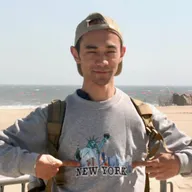
This is the story of the 88 days that changed my life and might change New York City. I live in Washington Heights. For those who don’t know, Washington Heights is a Dominican neighborhood in Upper Manhattan. On summer nights, Dominican music and excited conversation fill the main streets, but mine has been silent.
I started Trash Talk NYC to pick up litter in my neighborhood. I spent $40 on a trash grabber, trash bags, and a neck mount for my phone. I had no background in social media. My first video was a 20-minute reel filmed in horizontal, but I’d already settled on a mission. For some inexplicable reason, I named the series “Cleaning New York” and that video was its first day. I posted nearly every day for the next four weeks, and the project transformed explosively.
Every day, I visited a new location in New York City. On the subway, I started conversations with other passengers about litter and illegal dumping in their neighborhoods. They were invariably surprised, but when they learned that I was cleaning and studying these areas, they would provide a neighborhood or block that needed attention.
That system of crowd-sourced sites launched Trash Talk NYC across the Bronx, Queens, Manhattan, and Brooklyn. It sent me to open-air drug markets, dump-sites under bridges, beautiful parks, efficient business districts, and even subway stations.
The account’s growth was unbelievable. For an account its size, you would expect a healthy growth rate of 5-10% a month. Instead, I saw 20% growth every week and doubling every month. By the end of Trash Talk NYC’s first quarter, it had reached 85K followers on Instagram and 25K on TikTok.
Within weeks of the account’s formation, I already received messages from Assembly Members and Council Members. I had already received calls from police detectives and fire fighters. People begged me to clean their block, and we fielded upwards of 80 volunteers in a single weekend.
At the center of this attention wave, my small team was constantly buffeted by challenges. We joked that we were replacing the engine in a burning car. We designed and redesigned nearly every component of Trash Talk NYC on a weekly basis.
Email chains had to be recreated, trash grabbers had to be upgraded, wagons were replaced by cars, and purchase partners were replaced by local sponsors.
I started Trash Talk NYC to pick up my neighborhood’s litter, but now I don’t want to just pick up litter. Picking up trash is a band-aid solution to a deeper cultural and infrastructural problem. Instead, I want to give people hope and appreciation for a community they want to preserve. Traveling around New York City, I’ve visited many communities where “conservation” and “litter pickup” are ridiculous concepts. Dead trees, empty tree beds, and cracked, littered sidewalks scream of underfunding and neglect. Like many others, I wondered “why preserve a community that couldn’t be beautiful even with a caring steward?”
But I realized that neighborhoods could become and remain beautiful, and they could even do so cheaply. Tree beds are an incredible opportunity in New York City. However, few people have the knowledge or permits to do their neighborhood justice. We have learned effective ways for individual community members to more actively shape their environments, and we’re eager to share them. If we can provide people with simple resources to care for their communities, we can activate thousands of NYC residents to launch grassroots campaigns.
Without a supply sponsor, wooden tree guards cost $150 excluding tools and labor. The plants, mulch, and compost add an additional $100. For a business that receives littering fines, $250 is a small amount to take a stand against litter and create a beautiful monument on their block.
I want to use artistic expression, intelligent landscaping, sociology, and urban design to reduce littering rates. Visibility, efficiency, and decentralization are key components of this mission. New York City has a ready population waiting to help. By making the processes clear and efficient, we can activate a volunteer network to make visible and meaningful changes in our city.
Sincerely,
David